
If you want the short answer: kojic acid pigmentation even tone routines work best when they're low-strength, layered smartly and paired with daily sunscreen. Kojic acid is a gentle glow ingredient used in skincare to help visibly even the look of uneven tone, dark spots and dullness over time. It isn't a fairness ingredient and it isn't a quick fix — it's a slow, steady evenness ingredient. Used at around 1%, tucked into a moisturiser, and backed by SPF 50 every single morning, it becomes one of the least dramatic and most useful steps in an Indian skincare routine. Here's exactly how to use it, what to expect week by week, and how to build makeup that flatters your progress instead of hiding it.

What Does Kojic Acid Actually Do for Uneven Tone?
Uneven tone is that patchy, blotchy, two-shades-in-one-face situation — darker cheeks, a shadowy upper lip, sun-touched forehead, old spots that faded but never fully left. Kojic acid is one of the ingredients cosmetic formulators reach for when the goal is a more uniform-looking, less dull surface tone.
The 30-second definition
Kojic acid is a gentle glow ingredient used in skincare to help visibly even the look of uneven tone and dullness. For Indian skin, use a low concentration such as 1%, pair it with daily SPF 50, and give any routine at least 6 to 8 consistent weeks before you judge whether it is working for you.
Mechanistically — and carefully — kojic acid is generally described in cosmetic science as working on the melanin production pathway at a surface level, which is why it's grouped with other tone-evening ingredients rather than with exfoliants or hydrators. It doesn't scrub anything off. It doesn't "remove" pigment. It nudges the look of tone toward uniformity while your skin does its usual turnover. That's it, and that's enough.
Even tone is not fairness
Let's be extremely clear, because the Indian beauty market has been muddy about this for decades: evening your tone is not changing your tone. Your skin has a natural depth, and that depth is not a problem to be solved. What kojic acid is used for is reducing the *contrast* — so your under-eyes, cheeks and jawline read as one continuous shade instead of a patchwork. Deep skin stays deep. Medium stays medium. It just looks more even and more lit-from-within.
If you're already deep in the glow-active rabbit hole, our companion breakdown on Vitamin C for pigmentation in India covers the other half of this conversation, and our alpha arbutin versus Vitamin C comparison for dark spots is worth a read if you're deciding which tone-evener suits your skin's tolerance.
Where Will You Find 1% Kojic Acid in a Daily Routine?
The format matters as much as the ingredient. Kojic acid delivered in a rich, hydrating base tends to be much more wearable for daily use than a stripped-down high-strength treatment, especially in Indian climates where skin is already dealing with sun, sweat and AC swings.
Illuminating moisturiser format
SUGAR's kojic acid sits in the Bling Leader Illuminating Moisturizer with 1% Kojic Acid — which means you're getting your tone-evening step and your moisturiser step in one jar. For beginners, this is the sweet spot: no extra layer to remember, no separate serum to buy, no complicated ordering. Moisturiser is the step nobody skips, so putting the active there is a genuinely practical choice.

Why percentage matters
More is not better with tone-evening actives — it's just more likely to irritate. A low percentage like 1% is designed for daily, long-term use, and daily long-term use is exactly what visible evenness requires. High-strength anything used twice and then abandoned because it stung does nothing for your face.
This is especially relevant for Indian skin. Fitzpatrick III to V skin types are more prone to post-inflammatory marks, which means anything that irritates your skin can leave behind exactly the kind of darkness you were trying to even out in the first place. Gentle is not the cautious choice here — it's the strategic one.
Patch-test discipline
- Test behind the ear or on the inner forearm for two nights before you take any new active to your face — it's boring advice and it saves entire weekends.
- Introduce one new product at a time, roughly a week apart, so you actually know what your skin is reacting to.
- Start with alternate nights if your skin runs sensitive, then build to daily once it's comfortable.
- If you feel persistent stinging, burning or see redness that doesn't settle, stop and check in with a qualified professional — we write makeup guides, not prescriptions.
How Do You Layer Kojic Acid, Vitamin C, Niacinamide and SPF?
Here's where most routines collapse — not because the products are wrong, but because everything gets piled on at once. Layering is about giving each active a job and a time slot.
Morning stack
Mornings belong to antioxidants and protection. A Glow Boosting Vitamin C Serum goes on first for that fresh-awake glow, then moisturiser, then sunscreen. Kojic acid and Vitamin C are broadly compatible as an even-tone duo, but if your skin is new to both, keep kojic acid at night and Vitamin C in the morning to start.

Night stack
Nights are for repair-adjacent hydration and your tone-evening moisturiser. Cleanse, hydrate with a hyaluronic acid layer like the Aquaholic Hyaluronic Serum, then seal with your 1% kojic acid moisturiser. That's a three-step night routine you can genuinely do at 11:45 pm.
| Step | Morning (AM) | Night (PM) |
|---|---|---|
| 1 | Gentle cleanse | Cleanse (double cleanse on makeup days) |
| 2 | Vitamin C serum | Hyaluronic acid serum |
| 3 | Lightweight moisturiser | 1% kojic acid illuminating moisturiser |
| 4 | SPF 50 — non-negotiable | Lip balm and lights out |
The SUGAR POP SPF 50 Sunscreen with Vitamin C, Niacinamide & Hyaluronic Acid is the step that decides whether the rest of your routine was worth the effort. Unprotected sun exposure is the single fastest way to undo weeks of even-tone work — and in India, that includes the 20-minute scooter ride, the window seat on the bus and the balcony chai. Reapply if you're out through the day.
What not to pile on together
- Don't stack kojic acid with strong exfoliating acids or retinoids on the same night — alternate nights instead, so your barrier isn't doing three jobs at once.
- Skip scrubs while you're settling into a new active. Physical exfoliation plus tone-eveners is a fast route to irritation.
- Don't add three new actives in one week and then try to diagnose which one caused the flush.
- Still deciding between glow actives? Our take on Vitamin C vs Niacinamide and the longer niacinamide guide for Indian skin tones will help you pick rather than hoard.
What's an Honest Kojic Acid Timeline for Weeks 1, 4 and 8?
No before-and-afters, no promises, no "one week transformation" nonsense. Here's a realistic expectation curve.
What to notice early
Week 1 to 2 is about tolerance, not results. You're checking whether the formula sits well under makeup, whether it pills with your sunscreen, whether your skin feels comfortable. Any early "glow" you notice is usually hydration doing its thing — which is lovely, and also not the same as tone evenness.
By week 4, if anything has shifted, it tends to be overall clarity: skin looks a little less dull, makeup sits a little smoother. Spots take longer.
When to slow down
Slow down if you see flaking, tightness, unusual sensitivity or any stinging that lingers past application. Drop to two or three nights a week, double down on moisturiser and hyaluronic acid, and rebuild. Pushing through irritation is not discipline — it's just a longer detour.
Why consistency beats intensity
Six to eight weeks of a routine you actually do beats two weeks of a routine that's too aggressive to sustain. Tone evenness is cumulative, and the cumulative part only works if the product is being used. Keep the jar where you'll see it. Keep the routine short enough to survive a bad week. That's the whole strategy.
Which Makeup Flatters Even-Tone Progress Best?
Here's the fun part. As your base tone reads more uniform, you need less coverage — so switch your makeup approach from masking to enhancing.
Sheer base over full coverage
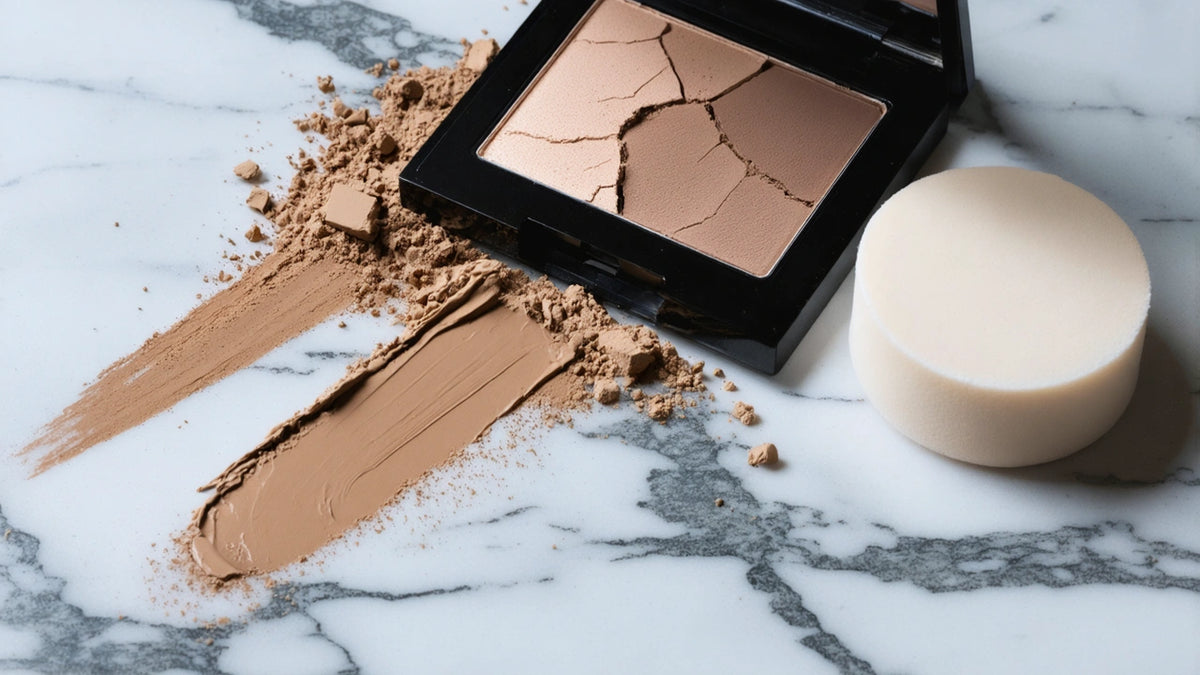
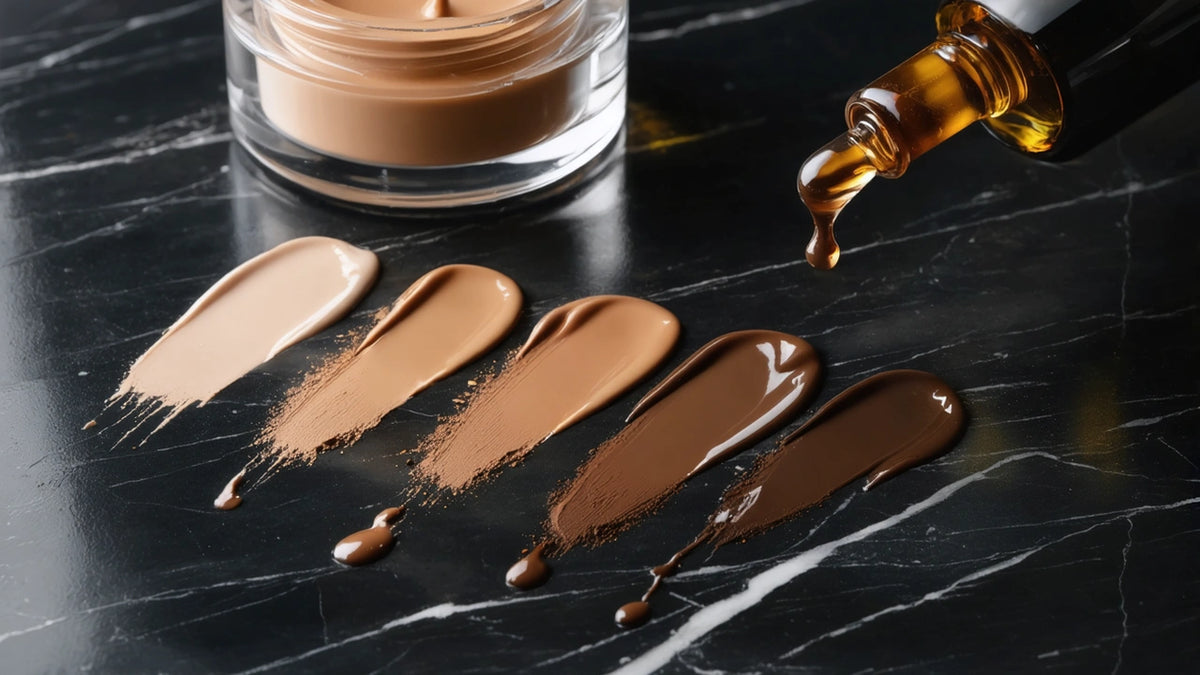
Use the Ace Of Face Foundation Stick sheer: three short swipes on cheeks, forehead and chin, then blend out with a damp sponge or your fingers. You get evenness without the flat, mask-like finish, and the shade range spans fair to deep Indian skin tones so you're matching your actual undertone rather than settling. For humid days, set only where you shine — a kaolin clay compact keeps the melt down without dulling your glow.
Spot-conceal, don't mask
Instead of full-face coverage, place product only where you need it: the darker patch near the mouth, a spot on the cheek, under-eye shadow. Tap, don't drag. Everything else stays skin.
Blush and lip balance
Even tone plus a well-placed flush is the whole look. Sweep blush high on the cheeks, then keep lips in the same warmth family — a peptide-infused shade like the Glide Peptide Serum Lipstick or a low-effort Nourishing Lip Balm for days when the base is doing the talking. Beginners: start with SUGAR POP. It's the friendliest price-to-performance entry into the whole system.
Frequently Asked Questions About kojic acid pigmentation even tone
Does kojic acid help with pigmentation?
Yes, kojic acid helps fade pigmentation by inhibiting tyrosinase, the enzyme responsible for producing melanin in the skin. This makes it useful for dark spots, sun-induced tanning, and post-acne marks that are common concerns for Indian skin tones. It works gradually rather than bleaching skin instantly, so results build up with consistent use over several weeks. It's most effective when paired with sun protection, since UV exposure can trigger the same pigment-producing pathway it's trying to
Is kojic acid safe for daily use on Indian skin?
Kojic acid at lower concentrations like 1% is generally considered safe for regular use, but daily application isn't necessary for everyone, especially those with sensitive or dry skin. Indian skin tones tend to be more prone to visible irritation and post-inflammatory darkening, so starting with alternate-day use and watching for redness or tightness is a smart approach. Always follow up with SPF, since kojic acid can make skin more reactive to sun exposure. If irritation shows up, scale back f
How long does it take to see results from kojic acid?
Most people start noticing a subtle brightening effect around 4 weeks of consistent use, with more visible even-toning by 8 to 12 weeks. Pigmentation fades gradually because melanin clusters need time to break down and surface through natural skin turnover. Results can vary based on how deep-set the pigmentation is, your skin type, and how consistently sun protection is used alongside it. Patience and consistency matter more than high concentrations when it comes to seeing lasting change.
Can you use kojic acid with vitamin C?
Yes, kojic acid and vitamin C can be used together since both target pigmentation but work through different mechanisms, making them complementary rather than competing actives. That said, layering two potent brightening ingredients at once can increase the risk of sensitivity, so many people prefer using them at different times of day or on alternating days. If your skin is new to actives, introduce one first and add the other gradually once your skin has adjusted.
What is the difference between kojic acid and niacinamide for pigmentation?
Kojic acid works by directly inhibiting the enzyme that produces melanin, making it more targeted for active dark spots and tanning. Niacinamide, on the other hand, works more broadly by strengthening the skin barrier, reducing inflammation, and slowing the transfer of pigment to skin cells. Niacinamide is generally gentler and better tolerated by sensitive skin, while kojic acid tends to show faster fading results on stubborn spots. Many routines use both together since they address pigmentatio
What are the benefits of using kojic acid for uneven skin tone?
Kojic acid helps even out skin tone by targeting excess melanin production, which reduces the appearance of dark spots, sun tan, and post-breakout marks over time. Beyond pigmentation, it has mild antioxidant properties that can help protect skin from some everyday environmental stress. Its gradual, non-abrasive action makes it a good fit for Indian skin, which often reacts strongly to harsher brightening actives. Consistent use paired with SPF tends to deliver the most noticeable improvement in
Shop SUGAR Cosmetics
Build the even-tone routine that actually fits your mornings: start with the Bling Leader Illuminating Moisturizer with 1% Kojic Acid, protect it with SPF 50 every single day, and let a sheer base do the rest. Everything is cruelty-free, made for Indian heat and humidity, and shade-matched from fair to deep. Swatch, compare and shop the full glow range on sugarcosmetics.com — your future even-toned self is going to be very smug about it.