
To find your perfect foundation shade for Indian skin, identify your undertone first, swatch a few shades along your jawline, check them in daylight, and wait to see how the formula settles before you commit. That is the whole game, bestie. Foundation shade matching is the process of pairing a base product not just to how light or deep your complexion is, but to your undertone — the warm, cool, or neutral hue underneath the surface. Get this right and your face looks like you, just even and glowy — never grey, never orange, never that dreaded mask line at the chin. Indian skin spans a gorgeous range (Fitzpatrick III to V, mostly), with warm and olive undertones running rampant, which is exactly why generic Western shade charts leave so many of us stranded. This guide fixes that, step by step, with zero fairness talk and all the celebration.

Why Does the Right Foundation Shade Change Everything?
Because the right shade is invisible — and that is the flex. A well-matched base doesn't announce itself; it just makes your skin look like the best-slept, best-hydrated version of itself. The wrong shade, meanwhile, gives ashy cheeks, an orange tint, or a floating face that stops abruptly at the jaw. If you've ever felt like foundation "isn't for you," it was almost certainly a shade-and-undertone mismatch, not your skin. Our shade-inclusive match guide for oily skin in humid weather proves the range is out there — you just need the method.
Shade vs Undertone: What's the Difference?
Shade is how light or deep your complexion reads — fair, wheatish, medium, dusky, deep. Undertone is the constant hue underneath: warm (golden, yellow, peachy), cool (pink, rosy, bluish), or neutral (a balance of both). Two people can share the exact same depth and still need completely different foundations because their undertones differ. This is the single most misunderstood part of shade matching, and nailing it is what separates a good base from a great one.
What You'll Learn in This Guide
We'll walk through the SUGAR Cosmetics Method for shade matching — a four-move routine trusted by our shade experts: read your undertone, swatch on the jaw, test for oxidation and humidity, then pick the format that suits your skin type. By the end you'll be able to shop confidently, whether you're a college fresher buying your first base or a bride building a wedding kit.
Step 1: How Do You Find Your Undertone?
Read the hue underneath your skin
Your undertone doesn't change with a tan or a season — it's the fixed hue beneath the surface, and it's the compass for every foundation decision you'll ever make. Most Indian complexions lean warm or neutral, with a big chunk of us carrying olive undertones (a greenish-golden cast that can trick you into thinking you're cool-toned when you're not). Knowing yours narrows a wall of 30 shades down to about three real contenders.
Warm, Neutral, or Cool — Which Are You?
- Warm: gold jewellery flatters you more than silver, and your skin looks golden or peachy in the sun. Most Indian skin tones live here.
- Cool: silver suits you best and your skin has a pink or rosy edge — less common but absolutely present across Indian tones.
- Neutral: both metals look great and you can't clearly pick a side. Lucky you — you're flexible.
- Olive: a warm subtype with a subtle green cast; you may need a foundation labelled "golden" or "olive" rather than a straight peach.
The Quick Wrist Test
Flip your wrist to the natural light near a window and study your veins. Greenish veins point to a warm undertone, bluish or purple veins to cool, and a mix you can't decide on means neutral. Research on skin colourimetry published in the International Journal of Cosmetic Science notes that melanin and haemoglobin together shape the visible undertone we perceive — which is exactly why a simple daylight vein check works better than any indoor bulb. Do this once, remember your answer forever, and every future foundation hunt gets faster.
Step 2: Where Should You Swatch Foundation?
Test on the jawline, not your hand
Never, ever judge a shade on the back of your hand — it's usually a different depth from your face. The jawline is the honest testing ground because it bridges your face and neck, the two zones your foundation has to unite seamlessly. Swipe three shades side by side, a stripe each, right along the jaw and let them sit.

Match to Your Neck, Not Just Your Cheek
Your face is often a shade or two different from your neck thanks to sun exposure, so the winning shade is the one that melts into your neck — that's what keeps the mask-line demon away. If a stripe vanishes when you glance in the mirror, that's your match. If it stands out as a distinct line, it's either too light, too deep, or the wrong undertone. Trust the disappearing act every time.
The Daylight Check Is Non-Negotiable
Store lighting lies. Fluorescent tubes wash you out and warm bulbs make everything look golden. Take your swatched jaw to a window or step outside and look in natural daylight, ideally facing away from direct sun. Cosmetic scientists recommend daylight as the gold standard for shade matching precisely because it renders the fullest, truest colour spectrum. What looked perfect under the store's spotlights can read totally off in the real world — so let the sun be the final judge.
Step 3: How Do You Test for Oxidation and Humidity?
Give the formula time to settle
Foundation can oxidise — it reacts with air and your skin's natural oils and can shift a touch deeper or warmer after application. Which means the shade that matched instantly might not match twenty minutes later. Patience here saves you from that dreaded end-of-day orange surprise.
Wait, Then Check Again
After swatching, wait 5 to 10 minutes before you make the call. Let the formula dry down and interact with your skin fully. If a shade goes noticeably darker or more orange as it settles, size down or choose a more neutral option. This single pause is the difference between "wow, flawless" and "why is my face a different colour by lunch." Give it the wait — your future selfies will thank you.
The Humidity Factor in Indian Weather
Here's the very Indian curveball: our heat and humidity can break down a base fast, and a formula that isn't sweat- and transfer-resistant will slide, patch, and change tone through a Mumbai monsoon or a Delhi summer wedding. This is why long-wear, transferproof performance isn't a luxury here — it's survival. Choose a base engineered to hold through humidity so your matched shade stays matched from morning chai to midnight dancing. Our sweat-proof makeup tricks for Indian summer are the perfect companion read once your shade is locked.
Which SUGAR Foundation Formula and Shade Should You Pick?
Once your undertone and depth are sorted, it's all about matching format to skin type — because the right shade in the wrong texture still won't feel like home. SUGAR's shade ranges are built with Indian complexions front and centre, so dusky, deep, wheatish, and fair all get true representation, not an afterthought.
From Fair to Dusky — Everyone's Covered
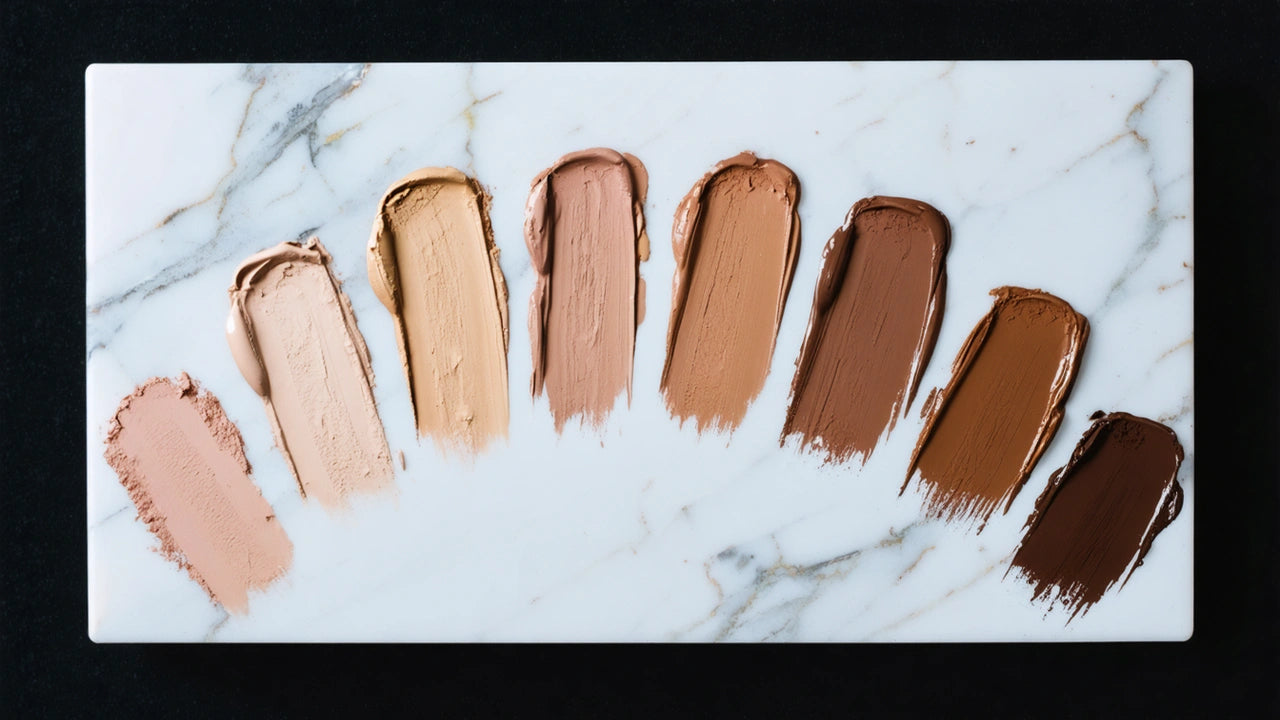
Whether you're a light neutral or a rich deep with warm-olive undertones, the depth range and undertone spread mean foundation for dusky skin finally gets golden and neutral options that don't turn grey. For a buildable, blendable base you can carry in your bag, the Ace Of Face Foundation Stick swatches straight onto the jaw and blends out for a natural, skin-like finish across the full shade wardrobe.
Choosing a Format by Skin Type
Your skin type decides your finish. Normal-to-dry skin loves a luminous base, oily and combination skin needs shine control, and everyone deserves comfort. Use this quick map:
| Skin Type | Best Finish | SUGAR Pick |
|---|---|---|
| Normal to dry | Dewy, radiant | Ace of Face Dewy Foundation |
| Oily to combination | Matte, long-wear | Matte Match Transferproof Foundation |
| All types | Buildable, portable | Ace Of Face Foundation Stick |
Every one of these is cruelty-free, because owning your look should never cost anyone else. And once your shade is on, the right tools make it seamless — a good dual brush like the Blend Trend Dual Eyeshadow Brush keeps your whole look precise from base to lids.

Lock It In So It Lasts
A matched shade deserves a proper set. Dust All Set To Go Banana Powder over your base to control shine and blur without changing your tone — banana powder's subtle warmth actually flatters most Indian undertones. If you're oily and battling humidity specifically, our guide to cream to powder foundation for oily Indian skin breaks down the longest-wearing formats for our climate.
To find your foundation shade for Indian skin, first identify your undertone as warm, cool, or neutral. Swatch a few shades along your jawline, then check them in natural daylight rather than store lighting. Wait five to ten minutes to see how the formula settles and oxidises, and pick the shade that disappears into your neck.
Frequently Asked Questions About foundation shade for indian skin
What is the difference between warm and cool undertones for foundation?
Warm undertones have golden, yellow or peachy hues, while cool undertones lean pink, red or blue. Most Indian skin tones fall into the warm or neutral camp, which is why golden-based foundations tend to look most natural. A quick test: check your wrist veins in daylight — greenish veins signal warm undertones, bluish-purple veins signal cool, and a mix means neutral. Once you know this, pick a foundation labelled with the matching undertone so it melts into your skin instead of sitting ashy or o
Is liquid or powder foundation better for oily Indian skin?
For oily Indian skin, a matte liquid or long-wear powder foundation works best because both control shine through humid weather. Liquid mattes give buildable, full coverage and stay put through the day, while powder foundations absorb excess oil and are quick to touch up on the go. If you sweat easily or live in a humid city, look for oil-free, transfer-resistant formulas and set them with a mattifying powder. Avoid heavy dewy foundations, as they can slide and emphasise oiliness by afternoon.
How do I make my foundation last all day in Indian heat?
To make foundation last all day in Indian heat, start with a mattifying primer, apply thin layers of a long-wear formula, and lock it with a setting powder and setting spray. Prep skin with an oil-control moisturiser so your base has a stable canvas. Build coverage gradually instead of piling on one thick layer, which cakes faster. Set your T-zone with translucent powder, then mist a setting spray to fuse everything together. Carry blotting papers for midday shine and press, don't rub, when touc
Can I mix two foundation shades to get my perfect match?
Yes, you can absolutely mix two foundation shades to create your perfect match, and it's one of the smartest hacks for in-between skin tones. Combine a slightly lighter and a slightly darker shade on the back of your hand, blend well, then swatch along your jaw to check. This is especially useful when your skin changes with seasons — go lighter in winter and darker in summer using the same two bottles. It also helps if your face and neck differ in tone, letting you customise a seamless blend.
How long does foundation take to oxidise on the skin?
Foundation typically takes 5 to 15 minutes to oxidise and settle into its true colour on your skin. Oxidation happens when the formula reacts with air and your skin's natural oils, often turning a shade darker or more orange, which is common on warm-toned Indian skin. That's why you should always wait after swatching before deciding on a shade — apply a little, give it 10 minutes in natural light, then judge the match. Choosing a shade slightly lighter can help balance out expected oxidation thr
Shop SUGAR Cosmetics
Ready to meet your match, gorgeous? Start with the buildable, snap-and-blend Ace Of Face Foundation Stick for a shade wardrobe that celebrates every Indian tone, then set it flawlessly with All Set To Go Banana Powder. Explore the full shade range and try the shade finder on sugarcosmetics.com or the SUGAR app — your perfect, disappears-into-your-skin base is waiting. Cruelty-free and built for Indian heat. Go find your glow.