

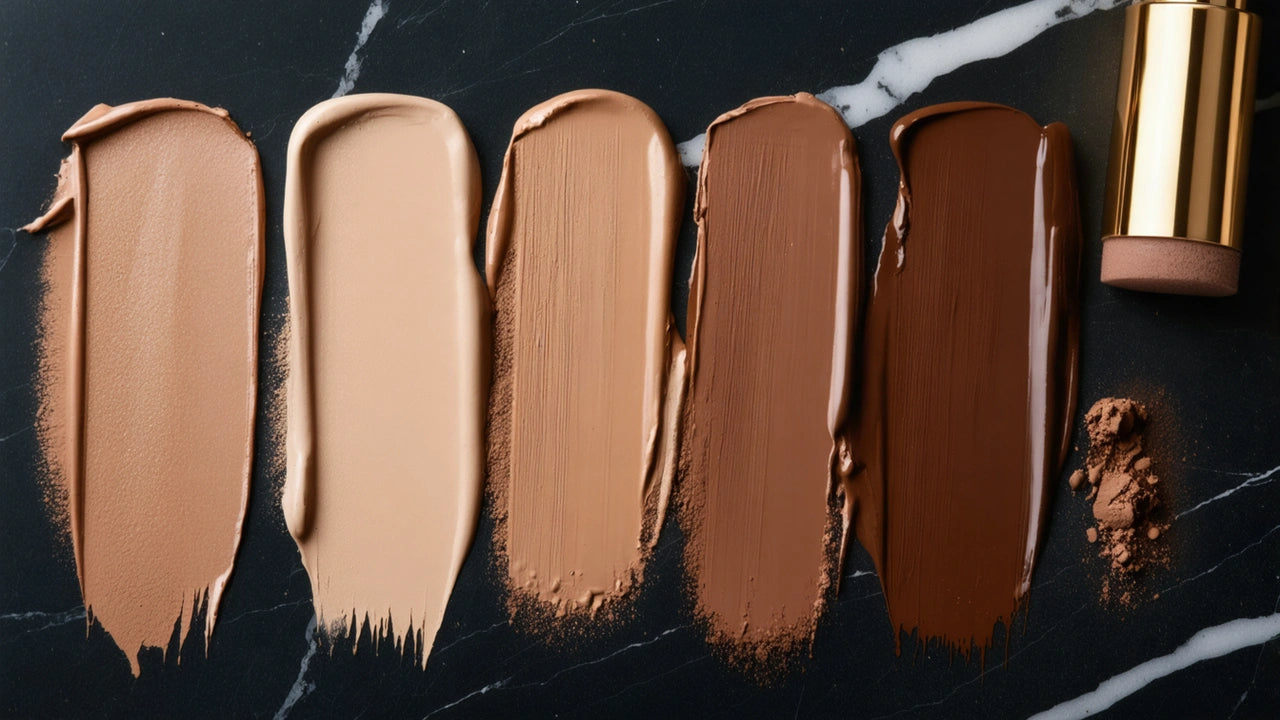

Here's the short answer, bestie: to nail your SUGAR foundation shades, first figure out your undertone (warm, cool or neutral) with a quick at-home vein-and-jewellery test, then swatch two or three shades along your jawline in natural daylight and pick the one that disappears into your skin. Foundation shade matching is the process of aligning a base makeup's depth and undertone with your natural skin so it looks seamless, never mask-like. Most Indian complexions lean warm to neutral, which is exactly why undertone — not just how light or deep you are — is the real hero of a perfect match.
Undertone 101: Are You Warm, Cool or Neutral?
Undertone is the subtle hue beneath your skin's surface that stays constant even when your complexion tans or lightens with the seasons. It comes in three flavours: warm (golden, peachy, yellow), cool (pink, red, bluish) and neutral (a balanced mix of both). Depth is how light or deep your skin reads; undertone is the temperature underneath. You can share the exact same depth as your cousin and still need totally different shades — because your undertones don't match. If you've ever wondered why a foundation looked flawless on your friend but grey or muddy on you, undertone mismatch is almost always the culprit. Before you go deeper, it's worth a quick read on foundation stick vs cream to powder formats so you know what you're choosing between.
The at-home undertone tests that actually work
You don't need a beauty counter to crack this. Try these in a few seconds:
- The vein test: Look at the veins on the inside of your wrist in natural light. Greenish veins signal a warm undertone, bluish or purple veins signal cool, and if you genuinely can't tell, you're likely neutral.
- The jewellery test: Hold gold jewellery against your skin, then silver. If gold makes you glow, you're warm. If silver flatters you more, you're cool. If both look great, welcome to the neutral club.
- The white-vs-cream test: Drape a pure white cloth near your face, then a cream one. If cream makes your skin look healthy and white makes you look washed out, you lean warm.
- The sun test: Do you tan easily and rarely burn? That usually points to a warm-to-neutral undertone, common across Indian skin.
Why undertone beats depth every single time
Getting your depth right but your undertone wrong is the fastest route to a foundation that oxidises orange or turns ashy. Most Indian complexions fall within Fitzpatrick skin types III to V, and the majority carry warm or olive undertones — which means shades with golden and honey bases tend to melt in beautifully, while overly pink or beige tones can sit chalky on top. Cosmetic scientists note that undertone mismatch is the single biggest reason foundations look "off" in photos, because the base reflects light at a different temperature than your surrounding skin. So before obsessing over light vs medium, ask: warm, cool or neutral first.
How Do You Match Your SUGAR Foundation Shade?
Once you know your undertone, matching becomes a game of two or three quick swatches. Here's the walk-through we swear by.
Reading SUGAR foundation shade names like a pro
SUGAR shade names are your cheat sheet. Warm, coffee-inspired names — think Latte, Macchiato, Cappuccino, Americano — signal golden and honey undertones, while cooler names lean pink-beige. The number usually climbs as the shade gets deeper, so a higher number means more depth, not a different undertone. When you're deciding, match the undertone family first, then fine-tune depth up or down by one step.

Test on the jaw, not the back of your hand
To find your SUGAR foundation shade, test your undertone at home using the vein and jewellery test, then swatch shades along your jawline in daylight to avoid ashy or orange results. The jaw bridges your face and neck, so a shade that vanishes there matches both. Always check in natural light, never harsh store lighting.
The back of your hand is almost always a different shade than your face — usually deeper and more sun-exposed — so swatching there sets you up to buy the wrong colour. Instead, run three vertical stripes of your top shade contenders along the jawline, wait a minute for them to settle, then step near a window. The stripe that seems to disappear is your match. A stick format offers precise, buildable coverage for on-the-go match testing, which is why the Ace Of Face Foundation Stick is such a handy shade-matching tool — swipe, blend a dot, and read it instantly.
Avoiding ashy or orange (the two classic fails)
Ashy happens when a foundation is too cool or too light for your warm undertone — it leaves a grey cast. Orange happens when a warm shade oxidises or when you overshoot the depth. If your swatch looks grey, go one shade warmer or deeper. If it looks orange after twenty minutes, your foundation is oxidising and you likely need a shade with a slightly cooler or truer base. A study published in the International Journal of Cosmetic Science found that pigment interaction with skin oils and air is the primary driver of foundation oxidation over the first hour of wear — so always judge a shade after it's set, not the moment you apply it.
Should You Choose Stick, Liquid or Dewy for Your Skin?
The right formula is as important as the right shade — because a gorgeous colour in the wrong texture will still slide, cake or go patchy in Indian weather. The SUGAR Cosmetics Method is simple: match the finish to your skin type first, then to the occasion.
Oily and humid: go matte and grippy
If your T-zone throws a shine party by lunch and you live somewhere sticky — hello, Mumbai and Chennai — you want a matte, transfer-resistant formula that holds through humidity. A cream-to-powder or long-wear liquid with an oil-controlling finish is your best friend here. For the full survival kit, our guide to shine-free makeup for oily skin in humid weather pairs perfectly with a matte base.

Dry and dull: reach for dewy
Matte on dry skin can cling to flakes and emphasise texture. For dry or dull skin, a dewy liquid keeps things fresh, plump and lit-from-within — the Ace of Face Dewy Foundation gives that healthy, glazed look without going greasy. Prep with a hydrating serum underneath and your base glides like a dream. If glow is the whole goal, our glass skin makeup look for Indian skin shows you how to layer it.
Coverage needs: from your-skin-but-better to full glam
Think about how much coverage the day demands. A light, breathable base is perfect for office days and college, letting your skin peek through. A medium-to-full HD liquid or cream foundation is your festive, wedding and photo-day pick, blurring texture and evening out pigmentation for the camera. Dermatologists recommend building coverage in thin layers rather than one thick coat, because thin films flex with your skin and are far less likely to crack or settle into fine lines through a long event.
| Formula | Best for | Finish | Wear |
|---|---|---|---|
| Foundation Stick | On-the-go, spot coverage, oily-combination | Natural-matte | Long, buildable |
| Cream-to-Powder | Oily, humid climates | Matte, velvet | Very long, grippy |
| Dewy Liquid | Dry, dull, mature skin | Radiant, glowy | Fresh, medium |
| HD Liquid | Events, photos, festive | Smooth, semi-matte | Long, full coverage |
How Do You Blend Foundation Like a Pro?
A perfect shade can still look off if the application is patchy. Blending is where good matches become invisible ones. The rule: less product, more layers, and always blend down and outward toward the neck so there's no harsh line.
Tools that make a real difference
Your fingers warm and press product in nicely, a damp sponge sheers it out for a skin-like finish, and a brush buffs it into a flawless, even film. A kabuki brush blends foundation seamlessly for a natural match, and the Blend Trend Foundation Brush - 052 Kabuki with its dense, soft bristles is ideal for buffing liquid or cream bases into that no-makeup finish. Work in small circular motions, then a few downward strokes at the end to lay any fine facial hair flat.
Setting for longevity through Indian heat
To make your base survive a full day of humidity, commutes and chai breaks, lock it with a light dusting of powder over the T-zone and a setting mist to fuse everything together. Setting mist also melts away any powdery flatness, bringing back a natural finish. Focus powder only where you get oily rather than all over, so drier areas stay fresh. This one step is the difference between a base that lasts three hours and one that lasts twelve.
Frequently Asked Questions About sugar foundation shades
How do I know if my SUGAR foundation shade has oxidised?
Your foundation has oxidised if it looks noticeably darker or more orange an hour or two after application compared to how it appeared when freshly blended. Oxidation happens when foundation reacts with your skin's natural oils and the air, and it's more common on oily skin. To avoid it, apply a mattifying primer first, choose a shade that looks a touch lighter on initial application, and set with powder. If you consistently notice this, size down half a shade next time you shop for your perfect
What is the difference between full coverage and buildable coverage foundation?
Full coverage foundation conceals blemishes, redness, and dark spots in a single layer, while buildable coverage starts sheer and lets you add more product only where you need it. Full coverage suits events, photos, or days you want flawless skin with zero touch-ups. Buildable coverage gives a more natural, skin-like finish and works better for everyday wear when you want to look like yourself, just polished. Many SUGAR foundations are buildable, so you control exactly how much drama your face i
How long does SUGAR foundation last on the skin?
SUGAR long-wear foundations are formulated to last up to 12 hours, though real-world wear depends on your skin type, weather, and prep. Oily skin in Indian humidity may see it break down faster around the T-zone, so a mattifying primer and setting spray can push longevity further. Dry skin holds foundation longer but benefits from a hydrating base to prevent patchiness. For all-day events, set with a light dusting of powder and carry blotting sheets rather than piling on more product.
Can I use SUGAR foundation without a primer?
Yes, you can use SUGAR foundation without a primer, but a primer helps it apply smoother, last longer, and resist creasing or oxidation. Think of primer as insurance: it creates a grippy, even canvas so foundation doesn't sink into pores or slide off in humidity. If you're in a rush or prefer a lighter routine, a well-moisturised face works as a base too. For long days, events, or oily skin, a primer is genuinely worth the extra 30 seconds.
What are the benefits of matching your foundation to your neck instead of your face?
Matching your foundation to your neck ensures your face and body look like they belong together, avoiding the dreaded floating-mask effect. Your face is often a slightly different shade from your neck and chest due to sun exposure or redness, so testing on the jawline where it meets the neck gives the most seamless blend. This trick guarantees your foundation disappears into your skin in natural light and in photos. Always swatch in daylight, since indoor lighting can trick you into the wrong SU
Is SUGAR foundation safe for acne-prone skin?
SUGAR offers foundations that are suitable for acne-prone skin, particularly non-comedogenic, oil-free formulas that won't clog pores or trigger breakouts. Look for lightweight, breathable options and always remove makeup thoroughly at the end of the day to keep pores clear. If your skin is actively reactive, patch-test a new foundation on your jaw for 24 hours before full application. Pairing the right formula with clean brushes and gentle cleansing keeps coverage flawless without aggravating a
Shop SUGAR Cosmetics
Your perfect match is a swatch away, bestie. Whether you want the precise, buildable ease of the Ace Of Face Foundation Stick or a full-glam HD finish for your next big day, there's a SUGAR foundation shade built for your undertone and your weather. Every formula is cruelty-free and engineered to hold through real Indian heat and humidity — so you can stop retouching and start living. Test your undertone tonight, swatch on that jaw in daylight, and find the shade that disappears into you. Face the facts: your best base is waiting.
%20with%20a%20quick%20at-home%20vein-and-jewellery%20test,%20then%20swatch%20two%20or...)