
Compact Powder vs Setting Powder: What Indian Skin Actually Needs in Summer

Compact powder and setting powder do two very different jobs, and confusing them is exactly why your makeup melts by 2 PM on a Mumbai afternoon. Compact powder is a pressed, portable face powder that delivers light-to-medium coverage and oil control on the go, while setting powder is a finely-milled (usually loose) finishing powder applied over foundation to lock it down for 12HR-plus wear. If your T-zone is throwing a tantrum in 40°C heat, you don't need more product — you need the right powder doing the right job. This guide breaks down compact, loose, banana and translucent powders, decodes the ingredients, and tells you exactly what works on Indian skin (Fitzpatrick III–V) when the mercury refuses to behave.
The Great Indian Powder Dilemma: Compact vs Setting vs Loose
Walk into any Indian woman's makeup pouch and you'll find one powder doing the job of three. That's the problem. The category splits into three distinct formats — pressed compact powder, loose setting powder, and pressed setting powder — and each was engineered for a specific moment in your routine.
What compact powder does vs setting powder
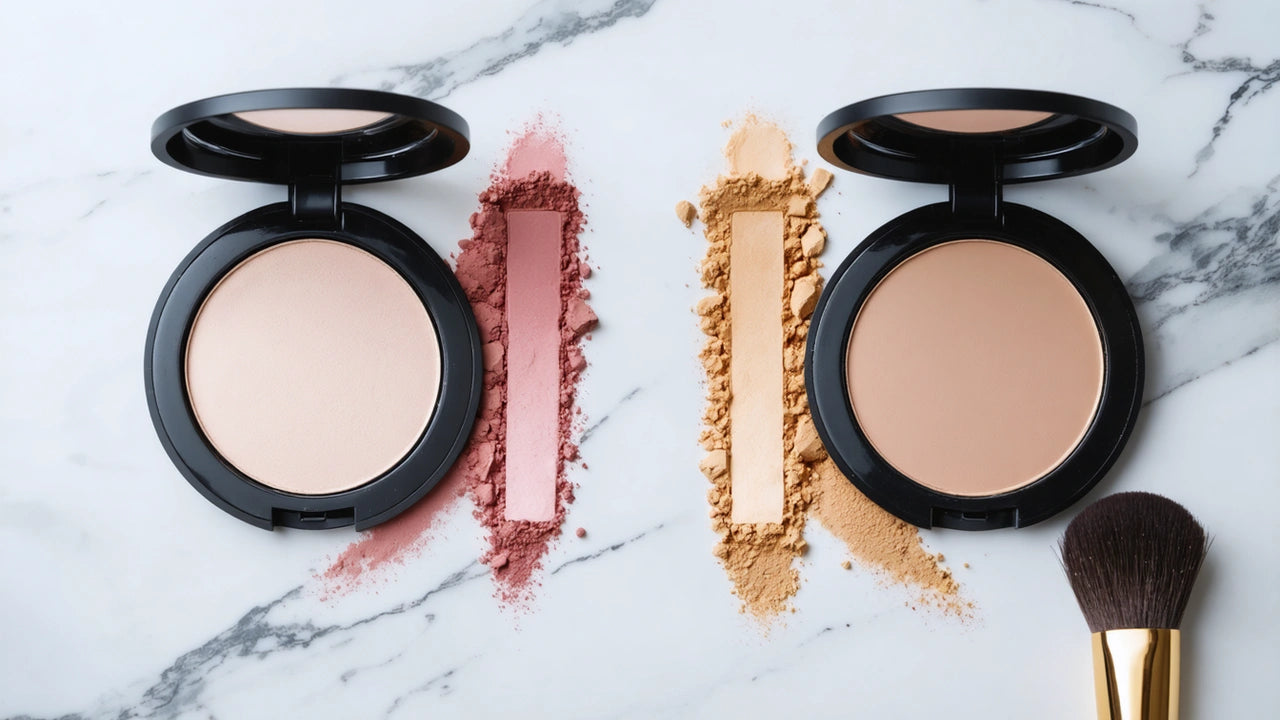
Compact powder is a pressed, pigmented powder that gives skin a smooth, matte finish with light coverage you can build. Think of it as your mid-day rescue: it absorbs sebum, evens tone, and slips into your handbag. Setting powder, on the other hand, exists for one job — to "set" liquid or cream foundation so it doesn't budge, crease, or oxidise. It's typically translucent or banana-toned and applied immediately after foundation. Our deeper breakdown in the compact vs loose vs banana powder guide explains the formula chemistry in detail.
Loose powder vs pressed powder — the key differences
Loose powder is unbound — pure micronised particles you sweep on with a fluffy brush for a weightless, blurred finish. Pressed powder is bound with binders and emollients (like dimethicone or magnesium stearate) and compacted into a pan. Loose wins on finish; pressed wins on portability.
Why Indian skin (and summer) demands a different powder strategy
Indian skin tones (Fitzpatrick III–V) carry more melanin and warm undertones, which means white-cast translucent powders can flash grey on camera. Add tropical humidity at 70%+ RH and sweat-driven sebum, and your powder needs to do double duty: oil control without ashiness, longevity without cakiness.
The Ingredients Behind the Powder: What You're Actually Applying
The difference between a powder that smooths and one that settles into pores comes down to particle size, binders, and pigment load. Cosmetic scientists note that micronised silica and starch particles act as optical blurrers — they scatter light evenly across the skin, softening the look of texture without adding heavy coverage.
Finely-milled vs coarse-milled: what it means for pore appearance
Research published in the International Journal of Cosmetic Science found that powder particles smaller than 10 microns produce a significantly softer-focus effect on skin and reduce the visibility of pores and fine lines, compared to traditional coarser talc grades. SUGAR's setting powders use micronised silica and rice starch precisely for this reason — the finer the mill, the more invisible the finish.
Banana powder pigment and why it neutralises on deep skin
Yellow sits opposite violet on the colour wheel, so a banana-tinted powder cancels the cool, dull cast that Indian skin sometimes shows after a long day. The All Set To Go Banana Face Powder is loaded with this corrective pigment plus oil-absorbing silica, making it the hero finishing powder for warm Indian undertones.
Talc-free vs talc formulas for Indian skin types
Modern formulations swap cosmetic-grade talc for kaolin clay, rice starch, and silica microspheres. These deliver the same slip and oil absorption without the controversy, and they sit kinder on sensitive, acne-prone Indian skin that's already battling pollution and SPF residue.
Which Powder Does Indian Oily Skin Actually Need?
This is where most women go wrong: they reach for a heavy compact when their skin is screaming for a featherlight setting powder. The fix depends on your skin type — and we're done with one-size-fits-all advice.
Oily T-zone control: loose setting powder wins
If your forehead and nose start glistening before lunch, a loose setting powder is non-negotiable. The All Set To Go Translucent Face Powder mattifies without altering your foundation shade and won't cake even when you reapply. Dust it across the T-zone with a fluffy brush and bake the under-eye for 5 minutes.

For combination skin: compact powder for portability
Combination skin needs strategy, not saturation. Use a loose setting powder at home, then carry a compact powder for targeted blotting at the T-zone through the day. Gen Z readers building their first kit will love the affordable SUGAR POP Banana Powder — same corrective yellow pigment, pocket-money price.
For dry Indian skin: avoid over-powdering
Dry skin doesn't need full-face setting. Limit powder to the under-eye (to stop concealer creasing) and the sides of the nose. Dust, don't pack. Over-powdering dry skin in summer paradoxically makes it look more dehydrated as patches catch the light.
Summer Powder Strategy: Baking, Setting and Blotting in India's Heat
India's summer isn't a single climate — it's three. Dry Delhi heat, humid Chennai swelter, and coastal Mumbai stickiness each demand a tweak in technique. The goal is the same: makeup that survives a metro ride, a meeting, and a post-work chai without melting into your collar.
The baking technique for 12HR oily skin control
Baking is the secret behind influencer-level longevity. After concealer, pack a generous layer of loose powder on the under-eye, chin, and T-zone using a damp sponge. Let body heat "bake" the powder into the cream product for 5–10 minutes, then sweep away the excess with the Blend Trend Face Brush - 007 Powder. The result: a blurred, sweat-resistant finish that holds for 12HR-plus.
Strategic powder placement for summer heat
Don't dust powder everywhere — you'll flatten your highlight and dull your blush. Powder only the oil-prone zones: forehead, nose, chin, and around the mouth. Leave cheeks and the high points of the face unpowdered so cream blush and highlighter still glow through.
How to touch up mid-day without caking
Always blot first, powder second. Press a clean tissue to absorb sebum, then tap (don't swipe) compact powder over the area with a sponge. Swiping disturbs foundation and creates that dreaded patchy look. This is the SUGAR Cosmetics Method: blot, tap, glow.
Does Banana Powder Work on Dark and Deep Indian Skin Tones?
Short answer: yes — and arguably better than translucent. The internet myth that banana powder leaves a yellow cast on deep skin started with poorly pigmented Western formulations. SUGAR's banana powder is calibrated for warm Indian undertones from the start.
The banana powder myth vs reality on deep skin
Dermatologists recommend yellow-toned setting powders for melanin-rich skin precisely because they enhance natural warmth instead of dulling it. The pigment load in SUGAR's banana powder is sheer enough to vanish on application but pigmented enough to brighten — no flashback, no ashiness.

Which SUGAR powder shade works for dusky skin
For Fitzpatrick IV–V (dusky to deep), the All Set To Go Banana Powder is the go-to. It brightens the under-eye, sets concealer two shades lighter than foundation (the universal highlight trick), and never throws white in flash photography. Pair it with our SUGAR concealer shade guide for Indian skin for a flawless base.
Setting dark foundations without flashback
Flashback happens when titanium dioxide or zinc oxide in setting powders bounces light back into the camera. Banana powders use far lower levels of these reflective pigments, which is why they photograph clean on deep skin while translucent versions can ghost.
Compact Powder vs Setting Powder: Quick Comparison Table
Compact powder is a pressed, lightly pigmented face powder used for portable touch-ups and light coverage throughout the day. Setting powder is a finely-milled, usually loose and translucent powder applied over foundation to lock it in place for long wear. Compact adds coverage and oil control on-the-go, while setting powder ensures 12HR-plus longevity and prevents creasing.
| Feature | Compact Powder | Setting Powder |
|---|---|---|
| Format | Pressed pan | Loose or pressed |
| Coverage | Light to medium | Sheer / translucent |
| Finish | Matte, smooth | Blurred, soft-focus |
| Best for | Mid-day touch-ups | Locking foundation post-application |
| Portability | Handbag-friendly | Vanity-only (loose) |
| Summer suitability | Excellent for blotting | Essential for 12HR wear |
| Skin type fit | Combination, oily | All skin types |
Powder FAQs for Indian Skin
Frequently Asked Questions About compact powder
Can I use compact powder without foundation in summer?
Yes, you can absolutely use compact powder solo in summer — it's actually a smart move when humidity makes full coverage feel like a sweat trap. Prep with moisturiser and sunscreen, then press a compact like SUGAR's Never Settle Skin Compact directly onto skin for a lightweight, blurred finish. It evens tone, controls shine, and skips the heaviness of foundation. For extra grip, dab a primer on your T-zone first. Touch up midday with a quick press (don't swipe) to refresh without cakiness.
How long does compact powder last on oily skin?
On oily skin, a good compact powder typically lasts 4 to 6 hours before you'll need a touch-up, depending on humidity, activity, and your base prep. Mattifying primers and oil-absorbing setting sprays can stretch that window to 8 hours. Compacts with silica, kaolin clay, or rice powder — like SUGAR's Never Settle Skin Compact — hold up better in Indian heat than talc-heavy formulas. Always blot excess oil with tissue before re-pressing powder, otherwise you're layering product onto sweat and inv
Is compact powder safe for sensitive or acne-prone skin?
Yes, compact powder is generally safe for sensitive and acne-prone skin if you choose non-comedogenic, talc-free formulas with calming ingredients like kaolin clay, silica, or rice starch. Avoid heavy fragrance, bismuth oxychloride, and overly drying alcohols, which can trigger redness or breakouts. Always patch-test new products and clean your puff or brush weekly — bacteria buildup is a bigger acne culprit than the powder itself. SUGAR's Never Settle Skin Compact is dermatologically tested and
Can I use setting powder with sunscreen?
Yes, you can — and you should — layer setting powder over sunscreen, especially in Indian summers when SPF tends to slip and shine. Apply sunscreen first, let it absorb for two to three minutes, then press (don't rub) setting powder on top using a damp sponge or fluffy brush. Pressing preserves the SPF film instead of disturbing it. For reapplication through the day, mineral powder sunscreens or SPF setting sprays are smarter than just adding more powder, which doesn't refresh sun protection on
What are the benefits of using a compact powder daily?
Daily compact powder use offers four big wins: instant shine control, evened-out skin tone, a smoother makeup finish, and a quick confidence reset on the go. Modern compacts also pull double duty with skincare-grade ingredients like niacinamide, vitamin E, and SPF, which protect skin from pollution and UV damage. For Indian climates, a compact is the most travel-friendly format — slip it into your bag, press over a shiny T-zone, and you're sorted. Just keep it talc-free and non-comedogenic to av
Shop SUGAR Cosmetics
Set it. Bake it. Blot it. Slay it. Whether you're prepping for a 9 AM meeting or a 9 PM rooftop, SUGAR's powder edit has your shine handled — cruelty-free, vegan-friendly, and built for Indian skin from Fitzpatrick III to V. Start with the cult-favourite All Set To Go Banana Face Powder for that brightened, baked finish, then layer in summer survival tips from our 24HR sweat-proof summer makeup routine. No melting. No caking. Just a face that holds till the last chai.