
Best Sunscreen for Indian Skin in Summer 2026: Tinted SPF vs Regular
A sunscreen is a topical photoprotective product that shields skin from ultraviolet radiation — and for Indian skin, it is the single most impactful step in any skincare or makeup routine. Whether you're navigating a Delhi summer commute or a Chennai afternoon, UV exposure in India is intense enough year-round to cause premature pigmentation, uneven skin tone, and accelerated ageing. The right sugar sunscreen formula should feel invisible on your skin, sit smoothly under makeup, and never leave a chalky white cast — and in 2026, tinted SPF options make that easier than ever.
The best sunscreen for Indian skin in summer 2026 is an SPF 30–50 formula that is non-greasy, doesn't leave a white cast, and can be worn comfortably under makeup — tinted sunscreen is an excellent 2-in-1 option for minimal coverage while protecting against India's high UV index.
Why Indian Skin Needs Sunscreen Every Single Day (Yes, Even Indoors)
India sits between 8°N and 37°N latitude, which means UV radiation levels remain dangerously elevated for most of the year. The UV Index in major Indian cities regularly hits 10–11+ during April–June — the World Health Organisation classifies anything above 8 as "very high" risk requiring protective action. Crucially, up to 40% of UV radiation penetrates cloud cover, and UVA rays pass straight through standard window glass, meaning indoor exposure is very real.
UV Index in Indian Cities: Delhi, Mumbai, Chennai
During peak summer (April–June), Delhi records a UV Index of 9–11, Mumbai hovers between 10–12, and Chennai — being closer to the equator — regularly hits 11–12. Even in winter, these cities rarely drop below a UV Index of 5, which is still classified as "moderate" risk. Daily sunscreen is not a summer-only habit; it is a year-round non-negotiable.
How UVA vs UVB Affects Indian Skin Differently
UVB rays are responsible for sunburn and surface skin damage — they are most intense between 10am and 4pm. UVA rays penetrate deeper into the dermis, triggering melanin overproduction that leads to dark spots, melasma, and uneven skin tone. For Indian skin types (Fitzpatrick III–V), UVA damage is particularly visible as stubborn hyperpigmentation rather than visible sunburn, which is why broad-spectrum SPF with high PA rating matters as much as the SPF number itself.
The Sunscreen–Pigmentation Connection
Research published in the Journal of the American Academy of Dermatology found that daily broad-spectrum sunscreen use significantly reduced the appearance of hyperpigmentation and improved overall skin tone uniformity over 12 weeks. Dermatologists consistently note that no brightening serum or pigmentation treatment can deliver lasting results if the skin is re-exposed to UV daily without protection. Sunscreen is, quite literally, the most effective anti-pigmentation product available — and it's available at every price point.
Tinted Sunscreen vs Regular Sunscreen: What's the Real Difference?
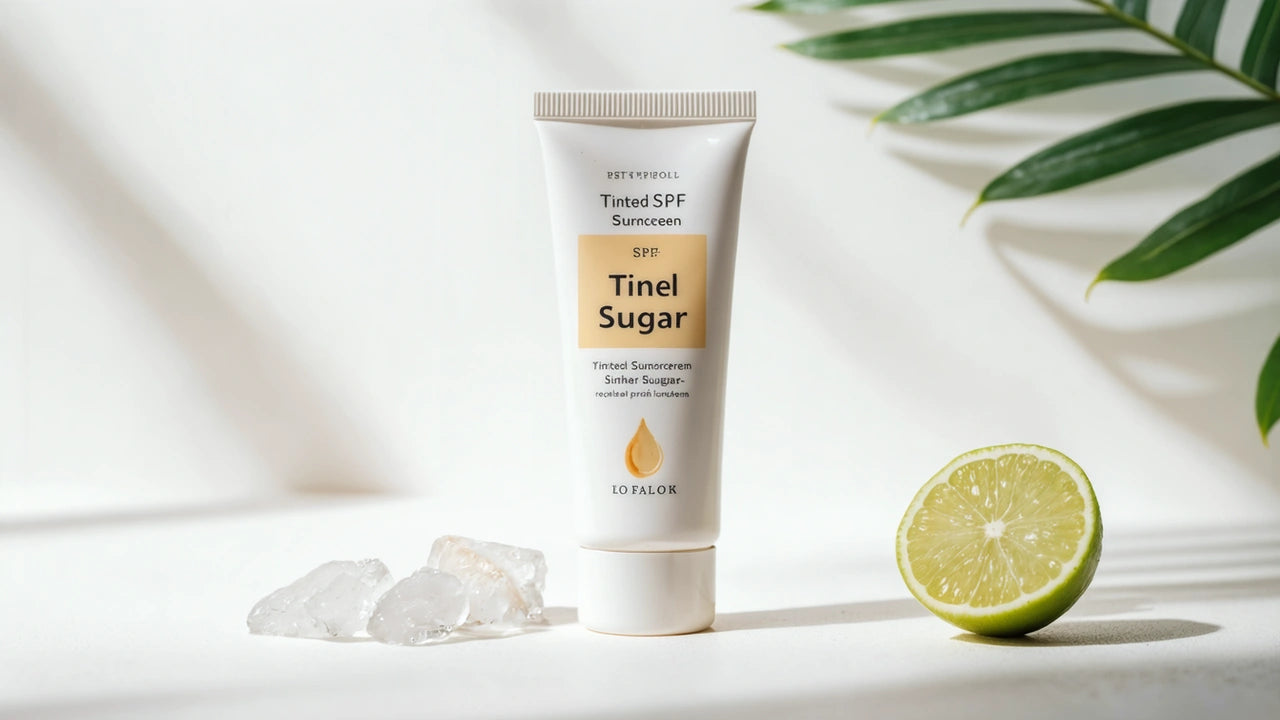
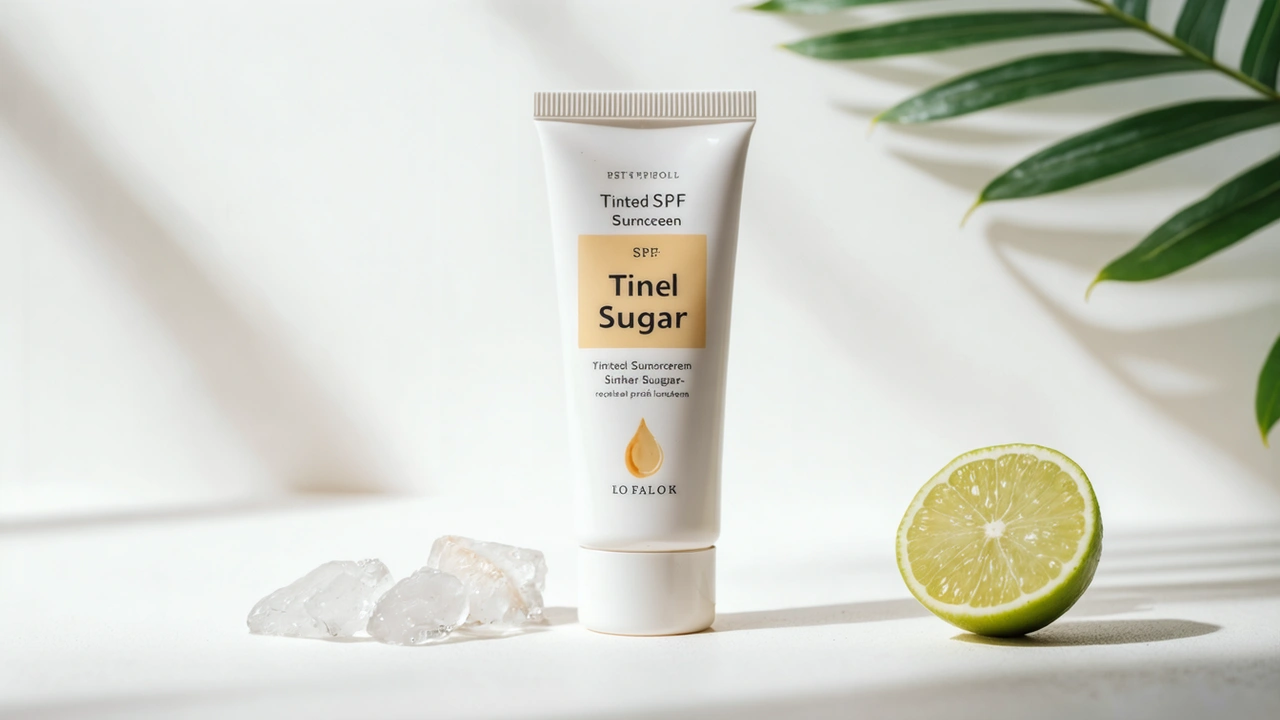
The core difference is simple: a regular sunscreen protects skin from UV radiation, while a tinted sunscreen does all of that plus deposits a sheer wash of pigment that evens out skin tone. Think of it as SPF meets a skin tint — it's not foundation-level coverage, but it's enough to blur minor redness, dullness, or uneven patches without feeling heavy. For India's humid summers, that 2-in-1 function is genuinely useful.
For readers wanting to layer tinted SPF correctly under foundation, our Foundation Shade Guide for Indian Skin Tones covers exactly how to build from a tinted base without colour mismatch.
What Tinted Sunscreen Actually Does for Skin
Beyond colour, tinted sunscreens often contain iron oxides — pigment compounds that provide an additional layer of protection against visible light (HEV/blue light). A study in Photodermatology, Photoimmunology & Photomedicine found that iron oxide-containing tinted formulas offered superior protection against visible-light-induced hyperpigmentation compared to standard transparent sunscreens. For Indian skin prone to melasma, this is a meaningful upgrade.
Shade Matching Tinted SPF on Indian Skin Tones
The common concern with tinted sunscreens in India is shade range — many imported tinted SPF products are formulated for lighter skin tones and can leave a grey or ashy cast on medium to deep complexions. When choosing a tinted sunscreen for Indian skin tones, look for warm-neutral or golden-beige tints rather than cool-pink formulas. Always swatch on your jawline in natural light before committing.
When to Choose Tinted vs Regular SPF
- Choose tinted SPF if you want a no-makeup, polished look for quick errands, work-from-home video calls, or low-key outings — it replaces your foundation step entirely on low-effort days.
- Choose regular SPF if you plan to wear full foundation or a skin-matching concealer, as layering two tinted products can alter your foundation shade.
- Choose tinted SPF under makeup only if the shade is at least one tone lighter than your skin — it will blend seamlessly once foundation is applied on top.
SPF 30 vs SPF 50 vs SPF 50+: What Number Do You Actually Need?
This is one of the most misunderstood areas of sunscreen science, and the confusion leads many Indian consumers to either over-invest in SPF 100+ formulas or under-protect with SPF 15. Here's the clear answer: for most Indian adults, SPF 30 to SPF 50 is the ideal range.
How to Read SPF Numbers Correctly
SPF 30 blocks approximately 97% of UVB rays. SPF 50 blocks about 98%. SPF 100 blocks around 99%. That 1–2% difference sounds small — and in terms of protection, it genuinely is. The bigger variable is not the SPF number, but how much product you apply and how consistently you reapply. Cosmetic scientists note that most people apply only 25–50% of the recommended amount (2mg per cm² of skin), which effectively halves the rated SPF regardless of the number on the pack.
Outdoor vs Indoor SPF Requirements in India
| Activity | Recommended SPF | PA Rating | Reapplication |
|---|---|---|---|
| Indoor (office, home) | SPF 30 | PA++ | Every 4–6 hours |
| Outdoor commute / errands | SPF 30–50 | PA+++ | Every 2 hours |
| Extended outdoor activity | SPF 50+ | PA++++ | Every 1.5–2 hours |
| Beach / hill station / sports | SPF 50+ (water-resistant) | PA++++ | Every 80 minutes |
How to Apply Sunscreen Under (and Over) Makeup
Sunscreen and makeup can absolutely coexist — it just requires a specific order and a little patience. The application sequence matters: skincare first, sunscreen second, makeup last.
The 15-Minute Rule After SPF Before Makeup
Chemical sunscreens (avobenzone, octinoxate, homosalate) require approximately 15–20 minutes to fully absorb into skin and activate their UV-filtering mechanisms. Applying foundation immediately after SPF can disrupt the sunscreen film and reduce its effectiveness. Set a timer, finish your coffee, and then reach for your primer.
Sunscreen as a Primer Substitute
A hydrating, non-greasy sunscreen can absolutely double as a makeup primer on low-makeup days — it creates a smooth, slightly tacky surface that helps foundation grip. For a more polished pore-minimising base, layer the Base Of Glory Pore Minimizing Primer on top of your SPF once it has absorbed. This combination is particularly effective for oily and combination skin types during India's humid monsoon-adjacent summer months.
If your skin tends to feel tight or dehydrated after SPF, the Aquaholic Priming Moisturizer works beautifully as a moisture buffer between your SPF and foundation — especially for dry or combination skin that needs an extra layer of hydration before a full makeup look.

Reapplying SPF Without Ruining Makeup
Reapplication is where most people abandon their SPF routine — and understandably, no one wants to ruin a full face of makeup at 1pm. The practical solution: use a powder sunscreen or an SPF-infused setting powder over makeup. The All Set To Go Translucent Face Powder can be used as a light-setting layer over moisturiser mid-day when reapplying a dedicated liquid SPF isn't possible — though note that powder SPF alone does not replace a proper liquid sunscreen base in the morning.
SUGAR's Best Sunscreen Picks for Indian Summer 2026
SUGAR Cosmetics approaches sun protection with what we call the SUGAR Skin-First Method — formulas that prioritise wearability and real-skin compatibility, so SPF actually gets applied daily rather than sitting unused in a drawer.
Citrus Got Real SPF30: Formula Breakdown
The Citrus Got Real SPF30 Sunscreen is SUGAR's hero daily SPF — and for good reason. Its lightweight, non-greasy texture absorbs quickly without the sticky residue that makes most Indian consumers skip sunscreen in summer. Formulated with a broad-spectrum SPF30 filter alongside skin-conditioning actives, it sits smoothly under makeup without pilling or shifting foundation. The citrus-forward scent makes the morning SPF step feel genuinely pleasant rather than a chore.

For Oily Skin: Lightweight SPF in Summer
Oily skin in Indian summer needs a sunscreen that controls shine rather than amplifying it. Look for matte-finish or gel-textured formulas with a dry-touch finish — avoid sunscreens with heavy silicone bases or emollient-rich formulas designed for dry climates. A light-layer application technique (two thin coats rather than one thick one) helps coverage without grease.
For Dry Skin: Hydrating SPF in Summer
Dry skin can feel genuinely parched in air-conditioned Indian offices, even during peak summer. A sunscreen with humectant actives like hyaluronic acid or glycerin provides a moisture-binding layer alongside UV protection. Pairing a hydrating SPF with the Aquaholic Priming Moisturizer (mentioned above) creates a deeply comfortable base that doesn't crack or flake under foundation.
Common Sunscreen Mistakes Indian Skin Makes in Summer
Even the best sunscreen formula can't protect you if it's applied incorrectly. These are the mistakes dermatologists see most frequently in Indian skin patients during summer months.
Not Using Enough Product
The clinical recommendation is a two-finger length of sunscreen for the face and neck combined — approximately one-quarter teaspoon. Most people apply roughly half that amount, which can reduce effective SPF protection by up to 50%. Don't be stingy with your SPF.
Skipping Neck and Hands
The neck and backs of the hands are among the first areas to show UV-induced ageing — visible as crepe skin texture, dark spots, and uneven tone. Indian outdoor conditions (auto-rickshaw rides, market walks, festival gatherings) expose these areas constantly. Include them in your daily SPF routine without exception.
Forgetting to Reapply After Sweating
Sweat physically degrades sunscreen film on the skin's surface — a 20-minute commute in Indian summer heat is enough to compromise your morning application. If you're heading outdoors, reapply every two hours, or immediately after heavy sweating. A compact SPF spray or powder SPF is the practical commuter's solution.
Frequently Asked Questions About sugar sunscreen
Which is the best sunscreen for Indian skin in summer?
The best sunscreen for Indian skin in summer is one that offers at least SPF 50, broad-spectrum UVA/UVB protection, and a lightweight, non-greasy formula that doesn't leave a white cast on deeper skin tones. Indian summers bring intense UV Index levels — often 8 or above — so a higher SPF paired with PA+++ or PA++++ rating offers meaningful protection. SUGAR's sunscreen range is specifically formulated for warm, humid Indian climates, making it a strong go-to for everyday wear.
Is tinted sunscreen better than regular sunscreen?
Tinted sunscreen isn't necessarily better than regular sunscreen — it depends on your skin goals. Tinted sunscreens offer the same UV protection as regular ones but also carry light-coverage pigments that even out skin tone, reduce the appearance of dark spots, and eliminate the ashy cast that some mineral sunscreens leave on brown skin. For Indian skin tones, tinted sunscreen is often the smarter pick because it pulls double duty as a daily SPF and a skin-perfecting base, cutting down steps in
How do you apply sunscreen under makeup?
Apply sunscreen as the very last step of your skincare routine — after moisturiser and before any makeup — using a generous, even layer across your face, neck, and ears. Wait about 2–3 minutes for it to absorb before reaching for primer or foundation, so it doesn't pill or break down your base. If you're using a tinted sunscreen with SUGAR's formulas, you can often skip the separate primer altogether. For midday top-ups, a setting spray with SPF or a pressed powder SPF works over makeup without
Can I skip moisturiser if I use tinted sunscreen?
You can skip a separate moisturiser with tinted sunscreen if your formula is hydrating enough for your skin type — many tinted SPFs contain humectants like hyaluronic acid or glycerin that provide sufficient daily moisture. However, if you have dry or dehydrated skin, layering a lightweight, fast-absorbing moisturiser underneath is still recommended before applying your tinted sunscreen. For oily or combination skin types in Indian summers, a hydrating tinted SPF alone is often more than adequat
What SPF do I need for Indian summers?
For Indian summers, a minimum of SPF 50 with broad-spectrum PA+++ or PA++++ protection is recommended by most dermatologists. India sits close to the equator, meaning UV Index levels regularly hit extreme ranges (8–11+) between March and September, even on overcast days. SPF 30 filters about 97% of UVB rays, while SPF 50 filters approximately 98% — a seemingly small difference that matters significantly with prolonged outdoor exposure. Reapplication every 2–3 hours is just as important as the SP
Protect Your Glow: Shop SUGAR Sunscreens for Summer
India's summer UV index waits for no one — and neither should your SPF routine. The Citrus Got Real SPF30 Sunscreen is your everyday shield: lightweight, white-cast-free, and genuinely enjoyable to wear. Pair it with the Base Of Glory Pore Minimizing Primer for a sweat-proof, all-day base that goes the distance from your morning commute to evening plans. Your skin's glow deserves protection — start with SPF, every single day.