

The best foundation for oily acne-prone skin is lightweight and buildable. Wear it in thin layers, conceal only the spots that need it, and set your T-zone with powder instead of piling on full coverage. A foundation for oily acne-prone skin is a base that evens out the look of skin and softens redness while staying thin enough that it doesn't make shine or texture stand out. One more thing before we start: makeup covers, it doesn't treat. Once you accept that, choosing a base gets much simpler.

What should you look for in a foundation for oily acne-prone skin?
Here's the short version. You want a formula that feels like almost nothing on your skin, lets you add coverage only where you want it, and works well with powder. The thing to avoid is a face that feels chipchipa by noon. A bit of real skin showing through is fine.
Most Indian skin falls between Fitzpatrick III and V. In humid cities like Mumbai, Kolkata, Chennai and Kochi, heat and sweat push oil through your base faster than dry weather does. That's why heavy, full-coverage formulas tend to slide or settle into texture by lunch.
For the rest of the kit beyond base (primer, blush and lips that last through oily days), see our guide to makeup for oily, acne-prone skin in India.
Lightweight and buildable
Lightweight means a thin, fluid or sheer texture that doesn't feel like a mask. Buildable means a second tap adds coverage without turning cakey.
Labels like oil-free or non-comedogenic can help you shortlist, but they don't guarantee anything for your face in particular. Patch test a new formula on your jawline for a few days before you wear it all over.
Thin layers beat heavy coverage
One thick layer of foundation sits on top of bumps and makes them look more raised. Two thin layers, plus concealer only where you need it, look like skin.
Less product also means less to break down when your T-zone gets oily in the afternoon. Ek patli layer, then decide if you need more.
Liquid vs stick vs cream-to-powder: which foundation for oily skin suits you?
All three can work on oily skin. The differences are finish, coverage and how much effort you can manage on a weekday morning.
| Feature | Liquid | Stick | Cream-to-powder |
|---|---|---|---|
| Texture | Fluid and spreads thin | Solid and glides on | Creamy at first, then dries down to a soft powdery feel |
| Finish | Natural to soft matte, depending on the formula | Soft matte to satin | Soft matte |
| Coverage | Sheer to medium and buildable | Medium and buildable, handy for spots | Medium |
| Best tool | Damp sponge or fingertips | Swipe lightly, then tap in with a sponge or brush | Damp sponge or flat brush |
| Best for which day | Office, college and long days | Touch-ups, travel and spot concealing | Quick events and air-conditioned rooms |
| Watch out for | Too much product can pool around the nose | Can feel heavy if you swipe it thickly all over | Can catch on flaky patches |
Finish
Oily skin usually looks best with a natural to soft-matte finish. A very dewy finish can turn into plain shine by the afternoon. A flat, very matte finish can cling to dry patches around spots. Aim for somewhere in between.
Coverage
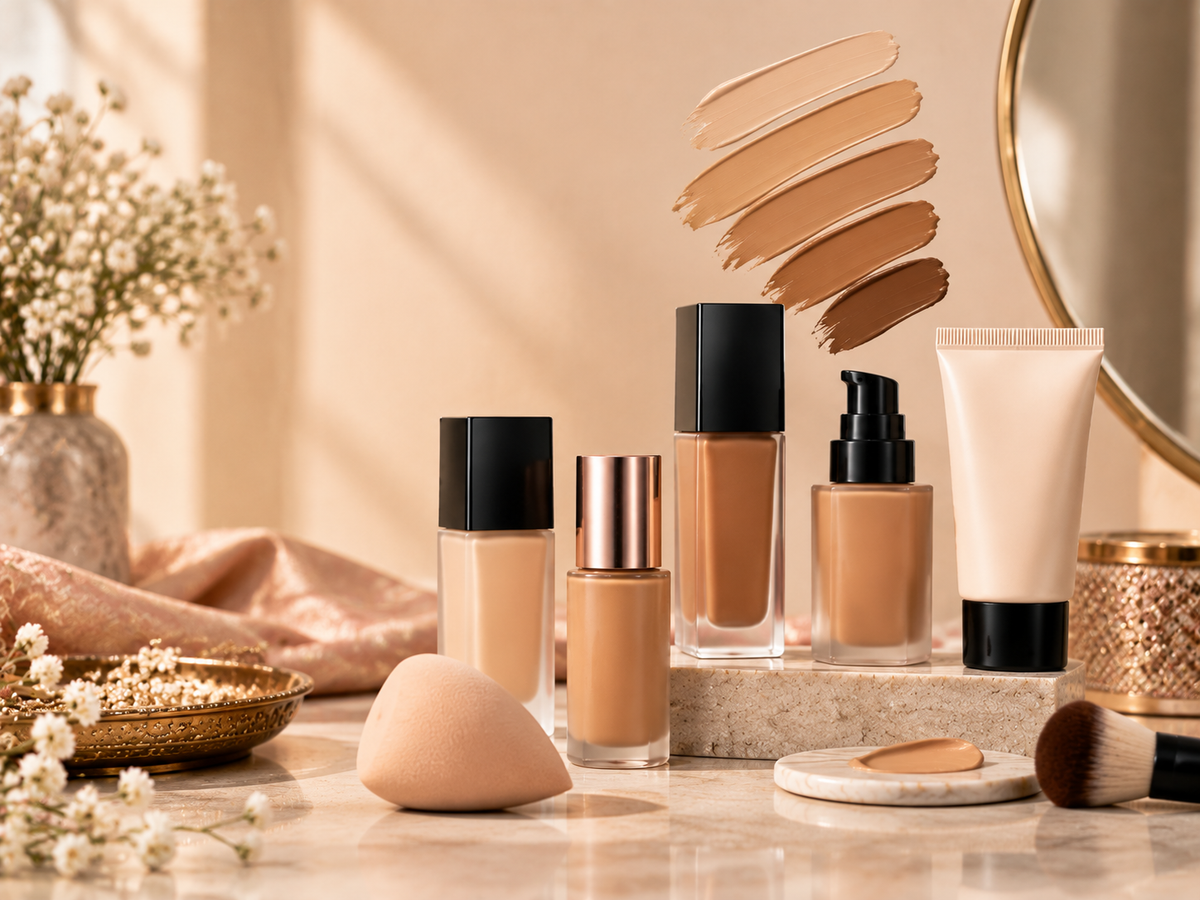
Start sheer and build only where you need more. If you prefer a liquid, the SUGAR POP Liquid Foundation range is an easy place to start. Use one pump, dot it on the centre of your face and blend outwards so the edges stay thinnest.

A stick can do two jobs. The Ace Of Face Foundation Stick can go all over in a thin swipe, or straight onto a single spot as concealer. Tap the edges in so you don't see a patch.
Best for which day
- Office or college: a sheer liquid all over plus a stick on spots looks natural under tube lights and holds up on a crowded commute.
- Travel days: a stick alone is enough. You won't spill it in your bag and you can blend it with your fingers in a cab.
- Shaadi functions: build two thin layers, add extra coverage only where needed and set well. Photos and stage lights pick up shine, so pay most attention to the T-zone.
How do you shade match foundation for oily skin that's medium or dusky?
On medium and dusky skin, most matching mistakes come from two things: testing in bad light and ignoring undertone. Indian undertones are often warm (golden or yellow), olive (a slight green-grey hint) or neutral. Work out yours first and the shade family is half sorted.
Jawline test in daylight
- Swatch three nearby shades in stripes along your jawline, from cheek down to neck. Don't test on your wrist or the back of your hand, because that skin is usually a different colour.
- Stand near a window in natural daylight. Shop lights and bathroom bulbs make shades look warmer or cooler than they really are.
- Choose the stripe that disappears into both your face and your neck. That avoids the floating-face look in photos.
- Wait around fifteen minutes and check again. Oily skin can change how a shade looks once it dries down.
Many dusky faces are slightly deeper around the edges and a little lighter in the centre. Using two shades, the closer match in the centre and the deeper one around the hairline and jaw, often looks more natural than one shade everywhere.
Avoiding orange and ashy
Ashy usually means the shade is too light or too cool for you. On dusky skin it shows up as a greyish cast, especially with a camera flash. The fix is to go deeper or pick a warmer, more golden option, not to cover it with bronzer.
Orange is often oxidation.
Some foundations look warmer or darker a while after you apply them, as the formula dries down and mixes with your skin's natural oils, and on oily skin that shift can be more obvious.
Our explainer on why foundation turns orange on Indian skin covers the fixes in detail. The quick ones: judge the shade after it dries down, not straight out of the bottle. Use less product. Blot before you touch up so fresh foundation doesn't mix with midday oil.
What is the 6-step foundation routine for oily acne-prone skin?
To apply foundation on oily acne-prone skin, follow six steps. First, cleanse and use a light moisturiser. Second, apply sunscreen and let it settle. Third, dot a thin layer of lightweight foundation. Fourth, tap it in with a clean damp sponge. Fifth, spot-conceal only where needed. Sixth, set the T-zone with a light dusting of powder.
Prep and SPF
- Cleanse and moisturise lightly. Wash with a gentle face wash and follow with a thin gel moisturiser. Oily skin still needs water. If you skip moisturiser, foundation can look patchy over dry spots. Hyaluronic acid, a common ingredient in light moisturisers, attracts and holds water, so skin feels hydrated without anything heavy on top.
- Apply sunscreen and let it settle. Use enough to cover your whole face and wait a few minutes before foundation, so the layers don't pill or slide.
On low-effort days, a tinted base with SPF can replace foundation. The SUGAR POP SPF 50 BB Cream with Vitamin C & Niacinamide gives a sheer tint. Keep your regular sunscreen underneath for proper sun protection and reapply through the day as the label directs. Niacinamide is a form of vitamin B3 that's often added to makeup and skincare to help skin look smoother and more even.

- Dot a thin layer of foundation. Put small dots on your forehead, cheeks, nose and chin. Starting in the centre and blending outwards keeps coverage where you need it and thin at the edges.
- Tap, don't drag. Bounce a clean, damp sponge over your skin. Dragging over raised spots moves product off them and can bother the skin. Tapping presses foundation into place.
Spot-conceal
- Cover only what you need to. Dab a stick or concealer directly on a spot or dark mark. Tap the edges with your ring finger, wait half a minute, then add a second thin layer if it still shows. On medium and dusky skin, a peach or orange-toned corrector under foundation can help cancel out the look of dark marks. Use very little.
Set with powder
- Set the T-zone only. Press powder onto your forehead, nose, chin and around your mouth with a puff, and leave your cheeks with a little natural glow. Pressing keeps the base in place. Sweeping can move it around.
Powders made with ingredients like kaolin clay generally work by soaking up surface oil and scattering light, so a light dusting makes skin look less shiny. On medium and dusky skin, a tinted powder close to your shade helps avoid a white cast in photos.
At night, take everything off gently. Use micellar water or a cleansing balm first, then your regular face wash, and don't scrub. For a full summer version with primer and setting spray, see our no-melt makeup routine for oily skin in Indian summers.
How do you touch up foundation for oily skin on a humid commute?
Local train, auto or metro, pasina toh aayega. In Chennai veyil, vervai is guaranteed. The aim is to refresh what you're wearing without adding a new layer on top of oil.
- Blot first. Press blotting paper or a clean tissue onto your T-zone. Don't rub, or you'll lift foundation along with the oil.
- Re-tap your spots. If a spot is showing through, dab a little stick on it and tap the edges in with your fingertip.
- Press, don't pile. Pat a small amount of powder onto your forehead, nose and chin only.
- Skip fresh liquid. New liquid foundation over midday oil tends to streak and look orange. Stick and powder are easier to control.
Your touch-up pouch only needs four things: blotting papers, a foundation stick, a compact or tinted powder, and a mini sponge in a zip bag. Our sweat-proof makeup guide for Indian summers has more ideas for very hot days.
What mistakes make foundation look worse on acne-prone skin?
Too much product
Adding more layers to hide a spot usually makes it more noticeable, because thick foundation catches light around the bump. Use less foundation all over and add more only on the spot itself.
Skipping removal
Sleeping in foundation after a long day or a late sangeet leaves makeup, sunscreen, sweat and oil on your face all night. Even when you're exhausted, a micellar water swipe followed by a gentle wash is worth the two minutes.
Dirty sponges
A sponge that stays damp in your bag collects old product and grime. Wash it with mild soap after each use if you can, let it dry fully in the open, and replace it once it starts tearing. The same goes for brushes and powder puffs.
If your skin itches, stings or your breakouts look angrier after a new product, stop using it and see a dermatologist. Makeup should sit comfortably on your skin. It shouldn't make things worse.
Frequently Asked Questions About foundation for oily acne prone skin
Which foundation is best for acne-prone skin?
The best foundation for acne-prone skin is a lightweight, oil-free, non-comedogenic formula that gives buildable medium coverage without feeling heavy. Look for a matte or soft-matte finish if you're oily, and skip thick, creamy textures that can sit in pores. Always swatch on your jawline, check the undertone in daylight, and patch test a new base for a day before wearing it to a long function. If a formula feels suffocating by afternoon, it's the wrong match for your skin.
Is a foundation stick or liquid better for oily skin?
A liquid foundation is usually better for oily skin because it spreads thinly and is easier to control around active breakouts. Sticks can work if the formula is matte and you blend with a damp sponge, but they deposit more product per swipe, so go light. Stick is great for quick touch-ups on a humid commute, while liquid suits all-day wear. If you're unsure, start with liquid and keep a stick only for spot coverage.
How do I stop foundation from looking cakey on bumps?
To stop foundation looking cakey on bumps, use less product and press it in with a damp sponge instead of dragging it across the skin. Apply a thin first layer, let it settle for a minute, then dab a little more only where you need coverage. Skip heavy powder over raised areas; a light dusting on the T-zone is enough. Cakiness often comes from dry patches, so moisturise well before you start.
How do I match foundation shade on dusky oily skin?
To match foundation on dusky oily skin, swatch three shades along your jawline and pick the one that disappears in daylight. Dusky skin often has warm golden or olive undertones, so a shade that looks too pink or ashy will stand out. Check again after ten minutes, because oily skin can make some formulas oxidise and turn darker. Match your face to your neck, not your hand.
Should I wear foundation every day on breakout-prone skin?
You can wear foundation daily on breakout-prone skin if you pick a lightweight formula and remove it properly every night. The real trouble is sleeping in makeup or skipping cleansing, not the foundation itself. On low-key days, try a thin layer only where needed, or switch to a tinted moisturiser or concealer. Give your skin a lighter makeup day on weekends. If breakouts worsen, see a dermatologist.
Can I use concealer with foundation on active pimples?
Yes, you can use concealer with foundation on active pimples, but apply it in the right order. Put on a thin layer of foundation first, then dab a small amount of concealer only on the spot and tap the edges until they blur. Avoid rubbing or piling on layers, since that can irritate the pimple and make it look raised. Set only that spot with a tiny bit of powder.
Shop SUGAR Cosmetics: Build Your Oily-Skin Base
Keep your base simple: one thin layer of SUGAR POP foundation in your jawline-matched shade, the Ace Of Face stick in your bag for spot touch-ups, and the Set The Tone Tinted Face Powder pressed onto your T-zone so you look less shiny without a white cast. It works for college, office days and every shaadi function in between. SUGAR is cruelty-free.